If you prefer to listen rather than read:
Or download the MP3
Are you Actively Religious? Then consider donating to a fellow believer. Are you part of the Disengaged Middle? Then consider donating to this blog a first step in leaving behind you're apathetic ways. Are you a Radical Humanist? If so then don't worry about donating, you're going to need every penny you have to afford that trip to Mars.
Or download the MP3
The other day, my sons were having a debate about Genghis Khan. The older one was saying that he was a very bad dude who killed a lot of people. Perhaps not as bad as Hitler, but a bad guy. The younger son pointed out that the Mongols had done some good things in terms of encouraging trade, uniting that part of the world, ushering in 100 years of peace (after the initial bloodiness), etc. And that just labeling them as the “bad guys” ignored the complexities of history. In an attempt to clarify the terms of the debate, I pointed out that how you felt about Genghis Khan and the Mongols depended to a certain extent on what your core values are. (You may remember this idea from my post on Steven Pinker.)
When I mentioned this, my older son was quick to point out that preventing deaths was definitely among the highest of his core values. (I didn’t point out that under that standard Genghis Khan was objectively a lot worse than Hitler.) The younger son confessed he wasn’t 100% sure what his core values were. I assume if he’d given it some thought he would have come up with some. That said, preventing death is an easy core value to arrive at, and in that respect his older brother had an advantage. But as I said in the Pinker post I mentioned, it’s possible that a reduction in preventable deaths is overly simplistic. Or that focusing just on the current state of violence is too short term. It’s certainly conceivable that what you really want your core value to be, is what’s best for the most people over the longest period of time (to borrow from utilitarianism for a moment.) And using this standard the Mongols definitely look a lot better than if you just look at their initial conquest. They’re still almost certainly weren’t a net benefit to the world, but it paints them in a better light at least. Let’s call this broader and more expansive most-people-longest-period core value “The Salvation of Humanity.”
A few months back I wrote a post specifically about why the “harvest is over”, as you may have already guessed, now it’s time to write a post about why “we are not saved”. Using the word “we” to stand in for all of humanity is fairly straightforward. The meanings of the words “are” and “not” should also be clear. It’s really the word “saved” and by extension “salvation” that require deeper definitions and that’s what I intend to dive into with this post. But in order to do so we need to define some categories
When talking about people the tendency is to divide them into two groups. That may take the form of dividing them into Republicans and Democrats, or traditionals and progressives, or liberals and conservatives, or may be just good and bad, . But this is frequently, if not always, a false dichotomy. In almost all cases there are really three kinds of people. There are the people at either end of things that make all the noise, and define the terms of the debate, but there’s also the people who don’t want to take a side, who don’t care. People who are at best disengaged and at worst entirely apathetic. These are the 44% of people who don’t vote, even for president, even when the stakes are really high. These are the vast masses of people who frankly don’t really think deeply about issues like the “Salvation of Humanity”. On the one extreme they may be people who have enough to worry about already whether because of poverty or illness or something else. On the other end it includes people who are happy and comfortable and content just to enjoy things as they are. We will call this group the Disengaged Middle, and at best they’re going to need to rely on someone or something else to save them and at worst their complacency may be actively hindering attempts at salvation. In other words if humanity is going to be saved it won’t be through the efforts of the Disengaged Middle.
This leaves the task of salvation to the two groups representing the active ends of the salvation debate. Who are the two groups that make all the noise? The first group believes that religion and God are the answer and they actively work towards some degree of divine salvation. Are they perfect? No. Are they correct? It’s hard to imagine that they could all be correct. But for this to be the path to salvation it only requires that one of them be correct. Obviously the difficulty is in figuring out which. But even one set of beliefs is correct it would mean that a viable path to salvation exists. We will call this group the Actively Religious.
The second group is comprised of those who are actively working to achieve salvation on their own. For both groups the definition of “salvation” is somewhat mercurial, but with this group you’re going to hear talk of immortality, artificial intelligence, and the singularity. But in it’s most basic form it consists of avoiding a premature end to humanity, and ultimately that requires getting off the planet in a sustainable fashion. This group generally doesn’t believe in God, but they’re passionately committed to science. We’ll call them the Radical Humanists, and the bulk of this post will be dedicated to them, and specifically getting off the planet, but now that we have defined the boundaries, it’s useful to go back and fill in more details on the Disengaged Middle.
With respect to “salvation” the Disengaged Middle is the great bulk of people (at least in the US and Western Europe) who neither attend church nor are actively involved in the sort of scientific salvation practiced by the radical humanists. They probably represent around 70 to 80% of the population (in the countries I mentioned). These are individuals who may be vaguely religious and hope that if they’re a good person it will all work out. Or on the other side of the equation they may have decided that whatever the future brings that the scientists will figure something out. Perhaps a significant majority belong to the Religion of Progress, the central tenant of which is that continual progress from this point until the end of time is ordained as some sort of immutable law of the universe. (John Michael Greer’s latest post has a great explanation of this.) But even if they do believe this, the vast majority do very little to push that progress forward. Mostly being focused more on when the next season of their favorite television show is going to be released then on any kind of effort towards an actual technological salvation.
And yes, as you may have guessed from that description, despite being on the Actively Religious side of the aisle, I have more sympathy for the Radical Humanists than the Disengaged Middle. As I have repeatedly said, I think they’re wrong. But at least we both agree on the need for salvation even if we disagree on what works best to bring it about. Thus, it is the Disengaged Middle I have the most problems with, and to return to a discussion of core values, if you want to live out as many years as you can with a minimum of stress and violence then the core value of minimizing stress and violence and death is great. But, as I intend to demonstrate, it almost certainly dooms us to a future where we’re stuck on a single planet until the sun gets too bright, or far more likely until some comet smashes into us. Perhaps that’s fine if you’re in the Disengaged Middle, but I suspect that if they really thought about it, it’s not, they just don’t think about it. But maybe I’m wrong, perhaps they do think about it but their myopia and selfishness means they just don’t care.
To restate the point I made in my earlier post when I reviewed Pinker’s book, The Better Angels of Our Nature, I don’t fault anyone, including my son, for embracing the values of life and peace. How could I? But it also shouldn’t be overlooked that the core value of reducing deaths in the short term is not the same as preventing the ultimate extinction of humanity in the long term. Which, if the Radical Humanists are right, only happens if humanity spreads to other planets. And means that any near term sacrifice is worth it in order to get off the planet, and to make humanity (or post-humanity) a truly interstellar race. Sacrifices which a short term focus on avoiding death and violence might prevent. In other words saving lives is not the same as saving humanity.
It should by now be obvious that the core value of reducing violence and preventable death is not even close to the same as the core value of getting off the planet, it may in fact be the opposite. To offer just one example. The reason we haven’t sent people to Mars has a lot to do with the difficulty of bringing them back, any reasonable estimate puts the cost of returning people to Earth at 10x the cost of just getting them there (at a bare minimum). This combined with our squeamishness at leaving them there to die means that our value of preventing death is directly opposed to the value of getting off the planet. Of course some people think that while it might be a one way trip that we wouldn’t be necessarily leaving them there to die, and we’ll touch on that idea more in a bit.
Of course the cost and the aversion to death are not the only reasons we don’t have men on Mars. There is also the recent idea that we shouldn’t waste resources on space exploration when we have so many problems here. This is evidence of the Disengaged Middle, who while not actively seeking salvation, frequently gets in the way of it, if only through imposing opportunity costs. In fact though it may seem that the Actively Religious would be the biggest impediments to space travel and exploration I don’t think that’s the case. People expect them to be opposed and have already dismissed them. Rather it’s the Disengaged Middle who subtly create the biggest roadblocks. And if they represent 70-80% of people, as I suspect, the Radical Humanists are dealing with significant friction before we even start talking about the technical difficulties, which are huge.
As we get into a technological discussion of space travel and colonization we have to mention Elon Musk, who is definitely the poster child for this endeavor, and by all accounts an incredibly smart individual. And at this point Elon is the person with the most concrete plan to create an extraterrestrial colony, in this case on Mars. Consequently, since any discussion of creating a colony on a planet other than Earth is going to be analyzed in relationship to his plan it’s probably just best to get it out of the way. Particularly since Elon’s plan represents something of a best case scenario.
In any endeavor cost can be used as a rough proxy for difficulty. To establish a sustainable colony on Mars (Elon speaks of getting millions of people there) it has to be a lot easier to get to Mars, which means it has to be a lot cheaper. Elon’s current estimate is that it would cost $10 billion per individual if you wanted to get to Mars under the current system. Obviously getting millions of people to Mars at that price is lunacy. Elon wants to reduce that down to $200,000 per person, which is a five million percent improvement. I won’t say that that’s impossible, but I can’t imagine that it’s something you can do overnight either.
Just as a brief survey, here are the challenges he has to overcome:
Initial money- The level of R&D, trial and error, and infrastructure required to pull this off is ridiculous. Most people agree that Elon can’t fund it all himself. Which means he has to get massive additional funding from somewhere else. A lot of people mention that NASA might help, but the amount of money we’re talking about is so huge that even NASA might only be able to make a small dent.
Habitation- Elon talks a lot about getting to Mars, but he doesn’t talk much about what to do once you’re there. It’s one thing to get someone to Mars it’s quite another to build him a house, a farm and a well. Elon has largely moved this question off to people other than himself. He wants to build a transcontinental railroad and let other people build the log cabins.
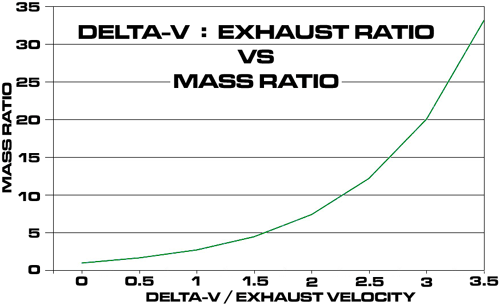
Fuel- For any kind of spaceflight, fuel is one of the single biggest problems. Particularly since any additional fuel adds weight which requires more fuel to lift the fuel just added, creating a non-linear curve that can quickly become vertical (i.e. you need infinite fuel). This is a particular problem, as I mentioned above, if you plan on returning from Mars. Musk has a plan to extract methane on Mars, but the details on that are VERY fuzzy.
A brief aside is necessary at this point, before we leave the subject of fuel. At this moment NASA is researching something called the EMDrive. And it has the potential to completely change this discussion. I don’t have the space to go into a detailed discussion of the EMDrive, but the first thing to note is that it’s a propellantless drive which makes everything I said before meaningless. The second thing to note is that it’s very controversial and we can’t say for sure at this point if it actually works. In particular it violates Newton’s third law. And similar to when the OPERA project thought they had detected faster than light neutrinos, you have to take any claims that overturn laws of physics with a many grains of salt, I mean like a whole shaker. In other words if the EMDrive actually works it could invalidate the majority of this post. Though all of the non-technical issues I already mentioned would still remain. End of aside.
As you can see Elon faces a number of non-trivial challenges in order for his plan to work. However despite all that let’s assume that he can do it, that he can get somehow get a ticket to Mars down to $200,000. Let’s even assume that’s the price for a round trip. Then the question still remains: Who would pay that money?
I can think of only two categories of people who might:
The Rich Tourist- I think everyone can imagine that there are certain very rich people who would pay $200,000 to go to Mars and come back just for the experience. But how many of them would stay? If you’re rich enough to afford a $200,000 trip Mars then you’re pretty rich. I can’t imagine anyone with a net worth of less than a million would go, and if you’re a millionaire would you rather live in a tiny 5’x5’ room, with decompressive death lurking around every corner for the rest of your life or would you rather live in Paris?
True Believers- Certainly there are some people who believe strongly enough in the same vision of the future that Elon does that they would go to Mars and stay there. But these people don’t only have to be true believers they have to have at least as much money as the first group and probably more. Recall that they don’t just have to pay the money to get there, they have to pay the money to stay there. Even using Elon’s widely optimistic numbers you’re still talking about $140,000 per ton to get stuff to Mars. Which means you need to spend an addition $140,000 just to make sure you don’t starve to death in the first year.
Both of these categories are prohibitively expensive, even if we grant Elon’s numbers. Recall that only 0.7% of the world’s population has a net worth of a million dollars or more, and that would appear to be the bare minimum for someone to go to Mars, either as a tourist or a resident.
Thus far, even granting that Elon reduces the price to $200,000, and further granting that there are actually millions of rich true believers who are willing to relocate to Mars, we still haven’t figured out how to make the colony sustainable. Dr. Scott Pace, the Director of Space Policy Institute had an admirable breakdown of the future of space exploration and colonization:
Such a question could be, “Does humanity have a future beyond the Earth?” Either a yes or a no answer would have profound implications. Addressing this question quickly leads to two sub-questions: can humans “live off the land” away from Earth, and is there any economic justification for human activities off the Earth? If the answer to both questions is yes, then there will be space settlements. If the answer to both questions is no, then space is akin to Mount Everest – a place where explorers and tourists might visit but of no greater significance. If humans can live off-planet, but there is nothing economically useful to do, then lunar and Martian outposts will, at best, be similar to those found in Antarctica. If humans cannot live off-planet, but there is some useful economic activity to perform, then those outposts become like remote oil platforms. Each of these scenarios represents a radically different human future in space and while individuals might have beliefs or hopes for one of them, it is unknown which answer will turn out to be true.
We can imagine that if Elon does manage to get the price down in the way he hopes, that in the initial flurry of excitement and optimism that we might have lots of people sign up to go to Mars, but at some point, after the initial excitement wears off, inevitably Pace’s categories would come to dominate the endeavor. And when that happens where does Mars end up? Is it Everest, Antarctica, a North Sea Drilling platform or America being discovered by the Europeans?
The fact that Pace mentions Antarctica is interesting, because it’s an instructive example. Antarctica is better for settlement than Mars by any conceivable measurement. It’s warmer than Mars. The air is breathable. There’s the same large supply of water trapped as ice. But most of all it’s 34 million miles closer! And yet Antarctica only has 5,000 temporary residents, and trust me, they are not living off the land. It’s also instructive to note that as a low estimate it costs $100,000/year to live there. The cost to spend a year on Mars has to be a least that high and it’s probably more like 10x that. If we can’t live off the land in our own backyard under much better conditions, how can we expect to live off the land on Mars? And yes I’m sure technology will improve, but you’re still faced with a situation where livability wise there’s no reason to have a million people on Mars until you have at least that many in Antarctica.
As far as whether it’s economically justified. I have seen very little that indicates that Mars has any special economic resources. When speaking of the Moon people talk about Helium-3 but apparently this doesn’t apply to Mars. There are some people who say that there might be precious metals and rare earth elements on Mars, but not only is the evidence for this currently lacking, but you still end up with Mars being the North Sea Drilling platform (presumably worked by robots) not the colony of millions which Elon envisions.
In the end it appears that there might only be one reason to go to Mars, and that’s the reason I initially mentioned, which is to make sure that we are not a one planet species. That when the Sun gets too hot or when the comet appears out of nowhere on a course for Earth that humanity can still be saved. But this requires that a large group of people pay a lot of money to go live in a miserably hostile environment for the rest of their lives. And it requires that the 70-80% of people (possibly more when you include the Actively Religious) who think it’s a dumb idea and a waste of money somehow go along with it.
If, despite everything, you still think the dreams of the Radical Humanists are enough to overcome all the challenges I have mentioned, I urge you to consider the fact that we haven’t even done everything we can here on Earth. There are plenty of catastrophes that might wipe out humanity, but be survivable by a group of 500-1000 people, living continuously deep underground, with lots of supplies. And yet nothing even close to that exists.
How am I supposed to take the dramatic plans of a Mars Colony seriously when the Radical Humanists can’t even do something simple and straightforward here on Earth to ensure the Salvation of Humanity?
Are you Actively Religious? Then consider donating to a fellow believer. Are you part of the Disengaged Middle? Then consider donating to this blog a first step in leaving behind you're apathetic ways. Are you a Radical Humanist? If so then don't worry about donating, you're going to need every penny you have to afford that trip to Mars.